The nose is a defining feature of the face, influencing both aesthetics and breathing function. While primary rhinoplasty can be transformative, sometimes the results don’t align with a patient’s expectations, or even worse, medical issues may develop afterward. For these individuals, revision rhinoplasty offers an opportunity to refine results or restore proper function.
Revision rhinoplasty is a secondary surgery performed to correct or improve the results of a previous nose procedure. Because the nose has already been altered once, this surgery is more technically demanding and may involve:
Why Patients Consider Revision Rhinoplasty
Patients may seek revision rhinoplasty for both cosmetic and functional reasons, including:
Both cosmetic and functional concerns can often be improved through a carefully planned revision.
Because every nose is unique, and every surgical history different, outcomes will vary from patient to patient. Every outcome depends on your anatomy, previous surgical history, and the amount of healthy tissue available for reconstruction
Recovery Timeline
First 1–2 weeks: Initial swelling and bruising.
Months 1–3: Noticeable improvement in shape.
Months 6–12: Final contour fully visible.
Patience is key! Remember that swelling can last up to a year. Surgeons typically recommend waiting at least 12 months after your initial rhinoplasty before considering revision, giving tissues time to fully stabilize.
Not everyone who is unhappy with their first rhinoplasty is automatically a good candidate for revision surgery. The most suitable candidates are:
Revision rhinoplasty is one of the most complex facial plastic surgeries. Selecting a board-certified surgeon with extensive experience in secondary procedures is essential. Look for someone who:
A comprehensive consultation allows your surgeon to evaluate your case and explain whether the benefits outweigh the risks for your situation. Revision surgeries naturally come with added complexity. Potential risks include persistent swelling, difficulty with healing due to scar tissue, and limited surgical options depending on available tissue.
If you’re considering revision rhinoplasty in San Antonio, the most important step is consulting with an experienced, board-certified plastic surgeon. Schedule a consultation to learn how our team can help you achieve your goals.
What is revision rhinoplasty and how does it differ from primary rhinoplasty?
Revision rhinoplasty is a secondary nose surgery performed to correct or improve the results of a previous rhinoplasty procedure. Unlike primary rhinoplasty, revision rhinoplasty is more technically demanding because the nose has already been altered once, often requiring cartilage grafting from the ear or rib, reinforcing nasal structure, and correcting scar tissue or irregular healing from the first procedure. This complex surgery addresses both cosmetic and functional concerns that may have developed after the initial rhinoplasty.
Do you offer revision rhinoplasty services in San Antonio and Shavano Park?
Yes, we proudly provide revision rhinoplasty services to patients throughout San Antonio, Shavano Park, and the surrounding Texas communities. Our board-certified facial plastic surgeon specializes in complex secondary rhinoplasty procedures and has extensive experience helping patients achieve their aesthetic and functional goals through carefully planned revision surgeries.
Why do patients need revision rhinoplasty after their first nose surgery?
Patients may seek revision rhinoplasty for various cosmetic and functional reasons, including breathing difficulties after surgery, visible asymmetry or contour irregularities, bumps, dissatisfaction due to under- or over-correction, or injury to the nose after the first procedure. Sometimes the initial results don’t align with a patient’s expectations, or medical issues may develop afterward, making revision rhinoplasty necessary to restore proper function and appearance.
How long should I wait before considering revision rhinoplasty?
Surgeons typically recommend waiting at least 12 months after your initial rhinoplasty before considering revision rhinoplasty. This waiting period allows tissues to fully stabilize and heal completely, as swelling can last up to a year after the initial procedure. Patience is essential because the final contour of your nose may not be fully visible until 6-12 months after your primary surgery.
What makes someone a good candidate for revision rhinoplasty?
The most suitable candidates for revision rhinoplasty are individuals who are in good overall health, non-smokers, have realistic expectations about the limitations and possibilities of the procedure, and are experiencing functional issues like difficulty breathing or visible cosmetic concerns. Candidates must also be at least 12 months out from their primary surgery to allow for full healing, and every outcome depends on your anatomy, previous surgical history, and the amount of healthy tissue available for reconstruction.
What is the recovery timeline for revision rhinoplasty?
The revision rhinoplasty recovery timeline typically follows this pattern: during the first 1-2 weeks, you’ll experience initial swelling and bruising; months 1-3 show noticeable improvement in shape; and months 6-12 reveal the final contour as it becomes fully visible. Recovery from revision rhinoplasty requires patience, as swelling can persist for up to a year, and the healing process may be more complex than primary rhinoplasty due to previous surgical changes.
Why is choosing the right surgeon crucial for revision rhinoplasty?
Revision rhinoplasty is one of the most complex facial plastic surgeries, making it essential to select a board-certified surgeon with extensive experience in secondary procedures. The right surgeon should specialize in facial plastic or reconstructive surgery, take time to listen and explain achievable outcomes, and be able to show before-and-after photos of revision patients. An experienced revision rhinoplasty surgeon helps ensure you feel informed, supported, and confident about your treatment plan.
What are the risks and limitations of revision rhinoplasty?
Revision rhinoplasty naturally comes with added complexity compared to primary procedures. Potential risks include persistent swelling, difficulty with healing due to scar tissue, and limited surgical options depending on available tissue from previous surgery. The procedure may involve cartilage grafting and structural reinforcement, and outcomes will vary from patient to patient based on individual anatomy, previous surgical history, and the amount of healthy tissue available for reconstruction.
How do I know if revision rhinoplasty is right for me?
Not everyone who is unhappy with their first rhinoplasty is automatically a good candidate for revision surgery. A comprehensive consultation with an experienced, board-certified plastic surgeon allows for evaluation of your specific case and explanation of whether the benefits outweigh the risks for your situation. The surgeon will assess your functional concerns, cosmetic goals, healing from your previous surgery, and overall health to determine if revision rhinoplasty is appropriate for you.
Where can I schedule a revision rhinoplasty consultation in San Antonio?
If you’re considering revision rhinoplasty in San Antonio or the Shavano Park area, schedule a consultation with our experienced, board-certified facial plastic surgeon at Texas Plastic Surgery. During your comprehensive consultation, our team will evaluate your case, discuss your goals, and explain how we can help you achieve improved results through carefully planned revision rhinoplasty surgery.
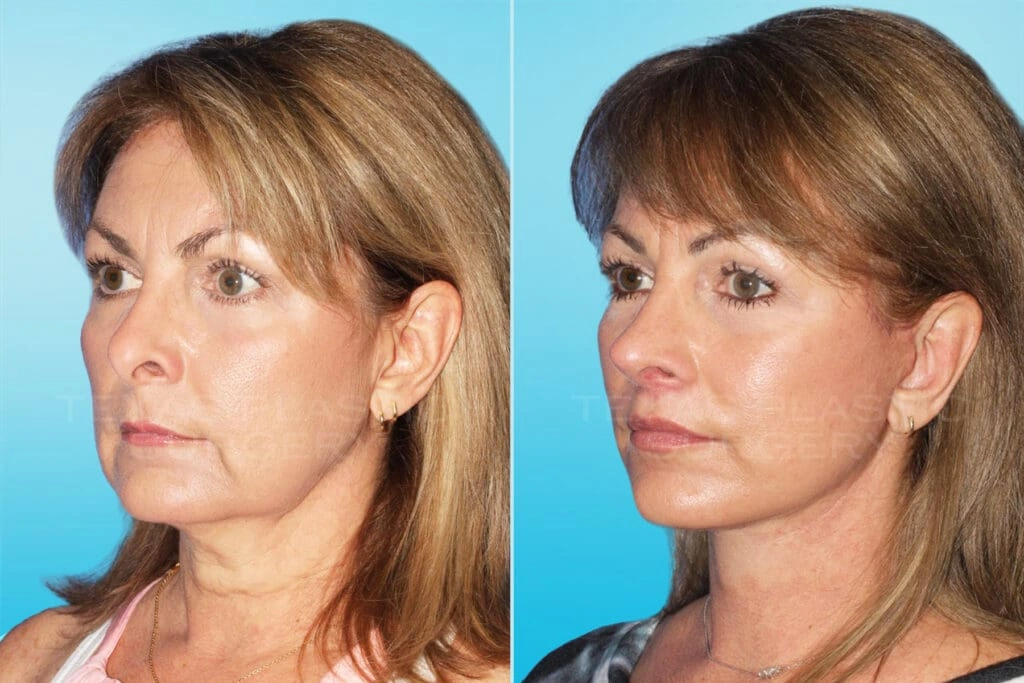
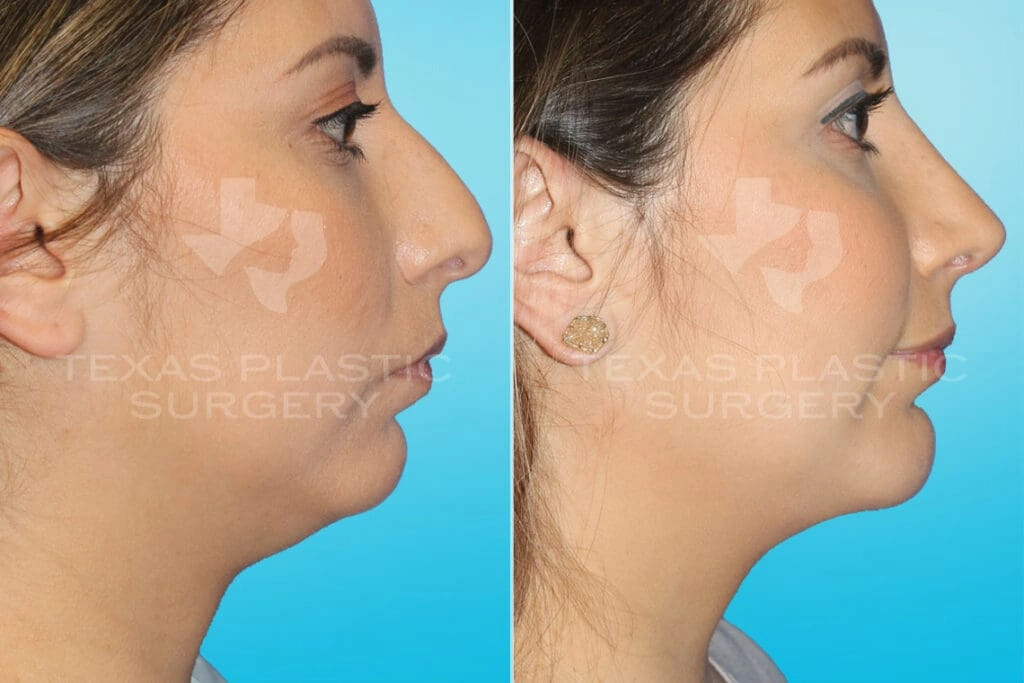
View Before & Afters
Contact us Today

