If you’ve been researching facelift procedures, you’ve probably encountered a wide range of terms including mini facelift and deep plane facelift, amongst others. It can quickly become confusing, especially when each technique claims to provide natural results. Both procedures are designed to improve visible signs of facial aging, but they work very differently and are intended for different types of patients.
Understanding the difference can help you determine which approach may make the most sense for your goals. This blog will help give you a clear-eyed, honest breakdown of both approaches. Not every patient needs the same surgery, and understanding the structural differences between techniques is actually one of the most useful things you can do before your consultation.
Facial aging doesn’t occur in the same way for everyone. Some patients primarily notice early jowling and mild sagging, while others experience more significant midface descent, deeper folds, and loss of definition along the jawline.
Because of this, surgeons often recommend different techniques depending on skin and neck laxity, fat descent in the cheeks, jawline definition and desired longevity of results. Two of the most common procedures patients compare are the deep plane facelift and the mini facelift.
The deep plane facelift is a more involved procedure that releases and repositions the SMAS layer along with the ligaments that tether it. Rather than simply tightening tissue from above, it works beneath the SMAS to reposition the entire facial structure upward and back, more closely mimicking the way the face actually ages.
This approach allows for:
Recovery is longer typically 2–3 weeks before most social activities are comfortable, with some residual swelling persisting for several months. That said, most of the visible recovery resolves in the first few weeks, and the results tend to be dramatic enough that patients consistently report the recovery was worth it.
The mini facelift, also called a limited-incision facelift, works in a more targeted zone. It uses smaller incisions (typically around the ear) and focuses primarily on the
lower face and early jowling.
A mini face lift is most known for:
It’s often described as a “refresh” rather than a major structural correction. The mini facelift tends to make the most sense for patients in their late 40s to mid-50s who are catching things early when there’s noticeable change but the overall degree of laxity is still limited. It’s also a reasonable consideration for someone who had a full facelift years ago and wants to address new early changes without undergoing a full revision.
There is no right answer, it depends on your anatomy, degree of aging, and goals.
Here’s a quick comparison of what each technique delivers:

No blog can tell you which procedure you need! That determination comes from an in-person assessment that looks at your skin elasticity, health, and your overall goals.
At Texas Plastic Surgery in San Antonio, Dr. Stallworth performs the full spectrum of facelift techniques and provides straightforward assessments about which approach makes sense for each patient. If you’re ready to take the next step, schedule a consultation today!
Q1: What’s the main difference between a deep plane facelift and a mini facelift?
The biggest difference is how deep each procedure goes and what it can address. A mini facelift uses smaller incisions and focuses on the lower face and early jowling — it doesn’t touch the midface, nasolabial folds, or neck. A deep plane facelift works beneath the SMAS layer, repositioning the deeper facial structures for more significant and longer-lasting correction. They’re designed for different patients and different degrees of facial aging.
Q2: Who is a good candidate for a mini facelift?
The mini facelift tends to work best for patients in their late 40s to mid-50s who are catching changes early — when there’s noticeable laxity, especially along the jawline, but it’s still limited in scope. It’s also worth considering for someone who had a full facelift years ago and wants to address new early-stage changes without a full revision. If you have more advanced sagging, midface descent, or neck laxity, a mini facelift won’t give you what you’re looking for.
Q3: Who is a better fit for a deep plane facelift?
Patients with moderate to severe jowling, significant midface descent, pronounced nasolabial folds, or neck laxity tend to benefit most from the deep plane approach. It’s also the better option for patients who want results that hold up for a decade or more, since the structural repositioning lasts considerably longer than a surface-level lift.
Q4: How long do results last for each procedure?
A mini facelift typically provides results that last around 5–7 years. A deep plane facelift generally holds for 10–15 years or longer, because the lift addresses the deeper structural causes of aging rather than tightening skin at the surface. Individual factors — skin quality, sun exposure, genetics, and overall health — all influence longevity for both procedures.
Q5: What does recovery look like for each?
Most mini facelift patients feel presentable within 10–14 days. Recovery from a deep plane facelift typically means 2–3 weeks before most social activities are comfortable, with some swelling that continues to resolve over several months. The most visible changes — bruising, initial swelling — clear in the first few weeks for both. The deep plane recovery is more involved, but patients consistently report the results justified the additional downtime.
Q6: Does a mini facelift address the neck?
The mini facelift is focused primarily on the lower face. It doesn’t address the neck, midface, or nasolabial folds. If neck laxity is part of what’s bothering you, that concern requires a neck lift component — which is most commonly paired with a deep plane facelift rather than a mini facelift.
Q7: Will either procedure look natural?
When performed correctly by a surgeon trained in structural facial techniques, both procedures can produce natural-looking results. That said, the deep plane facelift has an advantage here: because it repositions tissue rather than simply pulling skin, there’s less risk of the tight, windswept look associated with older techniques. The result tends to look rested and refreshed rather than “done.”
Q8: Can I start with a mini facelift now and do a deep plane facelift later?
It’s possible, but the conversation gets more complicated once scar tissue is involved. A surgeon performing a revision or a deeper procedure after a previous lift must work with altered anatomy — thinned skin, scar tissue, and potentially repositioned structures. It’s not impossible, but it adds complexity. If there’s a reasonable chance you’ll want deeper correction within a few years, your surgeon may recommend addressing the issue at the appropriate level from the start.
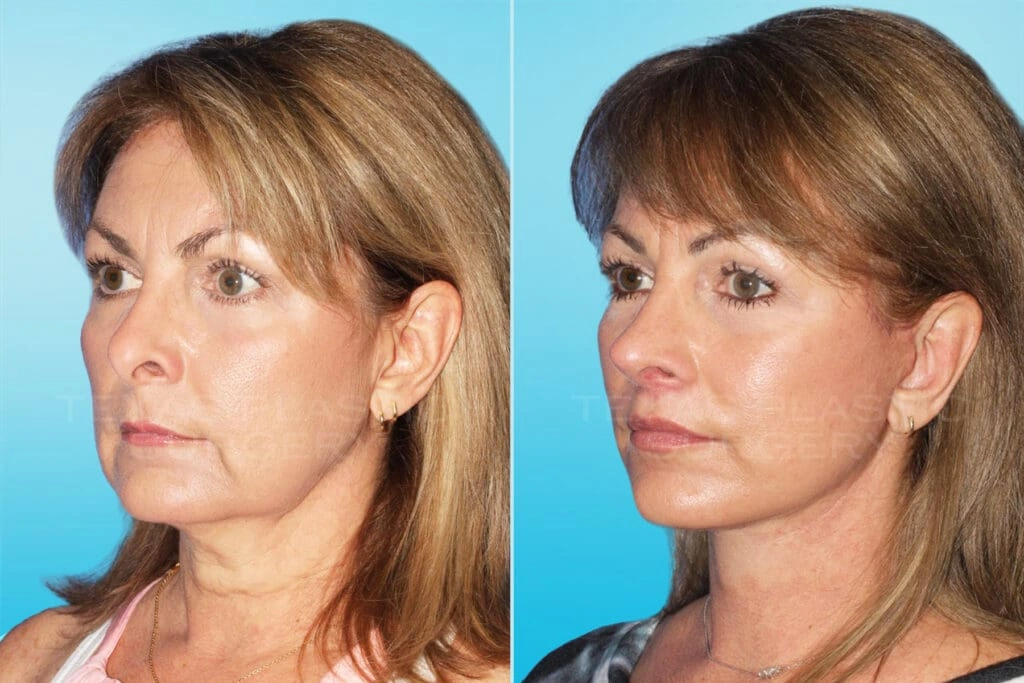
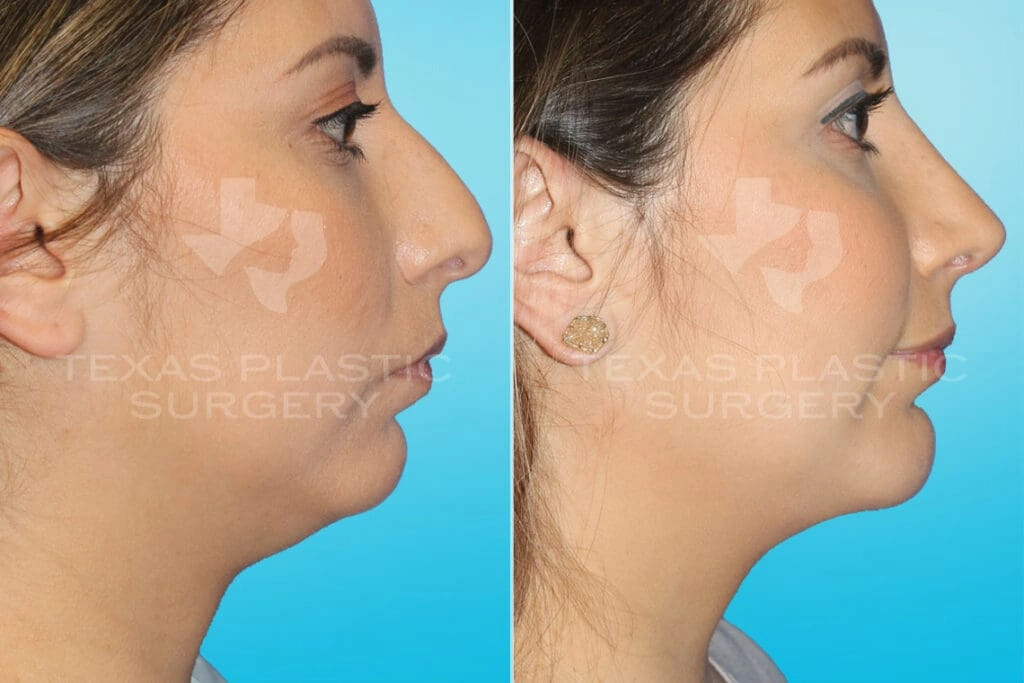
View Before & Afters
Contact us Today

