Many women notice that their breasts change over time. Pregnancy, breastfeeding, weight fluctuations, and natural aging can all contribute to breast sagging. If you’ve spent time researching breast lift surgery, you’ve probably run into two problems: either the information is too clinical, or it glosses over the real questions that matter most to patients.
A breast lift (mastopexy) is designed to reshape and elevate the breast tissue, restoring a more youthful position and contour. However, it’s important to understand what the procedure can realistically achieve, and when additional procedures may be recommended. This blog is designed to answer those questions before your initial consultation.
A Mastopexy is a surgical procedure that removes excess skin and reshapes breast tissue to lift the breasts to a higher position. Unlike augmentation, mastopexy does not primarily focus on increasing size. Instead, the goal is to improve breast shape, projection, and nipple position.
Key elements of the procedure often include:
What a Breast Lift Addresses
A breast lift CAN:
A breast lift CANNOT:
One of the most common questions patients ask is whether implants are necessary.
Lift Alone Is Often Ideal For Women Who:
Lift + Implants May Be Recommended For Women Who:
During consultation, surgeons evaluate breast tissue, skin elasticity, and patient goals to determine the best plan.
Breast lift incision patterns are determined by the degree of ptosis and the amount of skin that needs to be removed. There are three main patterns, each appropriate for a different level of correction:
Scar maturation takes time, most breast lift scars are still quite visible at 3 months, less visible at 6 months, and at their final faded appearance by 12–18 months. Silicone scar treatment and sun protection during healing both contribute to better long-term outcomes.
Recovery from mastopexy is generally more manageable than patients expect. Here’s a realistic overview:
If you’ve been researching breast lift surgery or mastopexy in Texas, a consultation can help determine the best approach for your anatomy and goals. Dr. Rokosz at Texas Plastic Surgery is ready to go over your questions and help you determine next steps. Schedule a consultation today!
Q1: What’s the difference between a breast lift and breast augmentation?
A breast lift (mastopexy) repositions and reshapes existing tissue — it doesn’t add volume. Breast augmentation uses implants to increase size and projection. Some patients benefit from both in the same surgery, depending on their goals and anatomy. If you want to restore shape and position without changing your size, a lift alone may be all you need.
Q2: How do I know if I need a breast lift?
The clearest signs are nipples that point downward or sit below the inframammary fold, breast tissue that has descended below the fold, and loss of shape or projection that hasn’t responded to supportive bras or exercise. A consultation with Dr. Rokosz is the only way to assess your degree of ptosis and what technique would address it.
Q3: Will a breast lift leave noticeable scars?
Yes — all incisions leave scars, and it’s important to go in with realistic expectations. That said, most breast lift scars are well-positioned and fade considerably over time. At three months, scars are still visible. By 12 to 18 months, with proper care (silicone treatment, sun protection), most patients are satisfied with how they’ve healed. Dr. Rokosz will walk you through scar care during your consultation.
Q4: Can a breast lift be combined with other procedures?
Yes, and it’s common. Some patients combine a breast lift with augmentation to address both shape and volume. Others include it as part of a mommy makeover alongside a tummy tuck or liposuction. Combining procedures means one recovery period and one anesthesia session — Dr. Rokosz will assess whether combining makes sense for your health and goals.
Q5: What’s the difference between the three incision types?
The incision pattern depends on how much sagging you have and how much skin needs to be removed. A periareolar lift uses a single incision around the areola and works for minimal ptosis. A vertical (lollipop) lift adds a downward incision and handles most moderate cases. A Wise pattern (anchor) lift adds a horizontal incision along the fold and is used for more significant sagging. Your surgeon determines the right technique based on your anatomy — not your preference alone.
Q6: How long do breast lift results last?
Results are long-lasting, but not permanent. Aging, gravity, weight changes, and future pregnancies will continue to affect breast shape over time. Maintaining a stable weight and wearing a supportive bra can help preserve results. Many patients enjoy their outcomes for 10 or more years before noticing new changes.
Q7: When is the right time to have a breast lift?
Most surgeons recommend waiting until you’re done having children, since pregnancy and breastfeeding can significantly alter breast tissue and affect your results. Beyond that, the right time is when you’re in good overall health, at a stable weight, and ready to commit to a recovery period. Dr. Rokosz discusses timing in detail during your consultation.
Q8: Is a breast lift covered by insurance?
In most cases, mastopexy is considered a cosmetic procedure and is not covered by insurance. There are rare exceptions when the procedure is tied to a reconstructive need. Financing options are available — your care team can walk you through what’s offered at Texas Plastic Surgery.
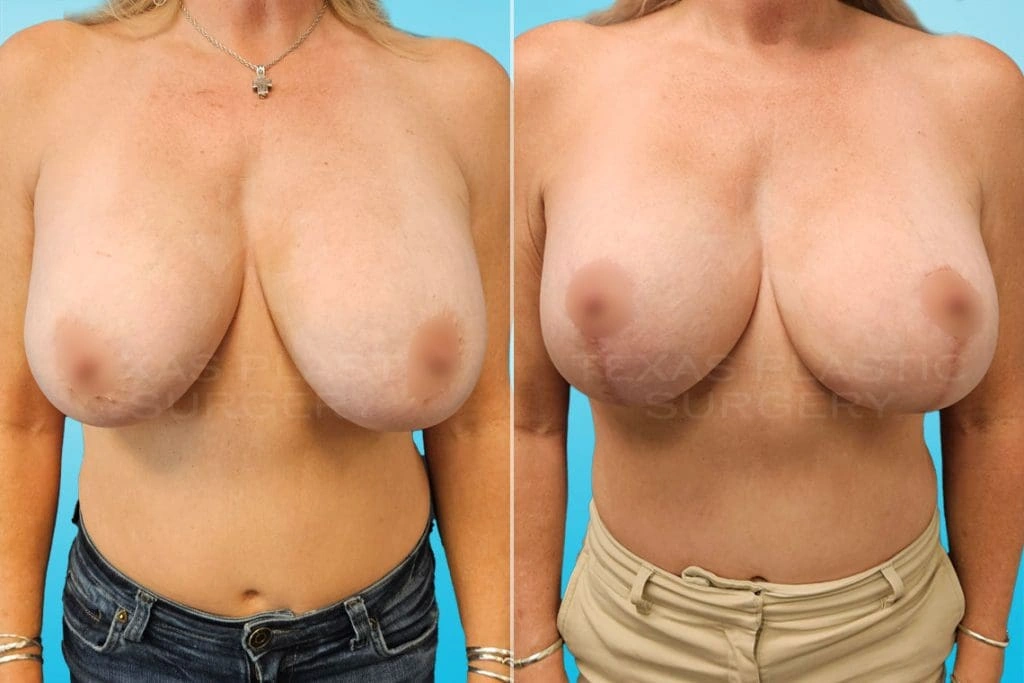
View Before & Afters
Contact us Today

